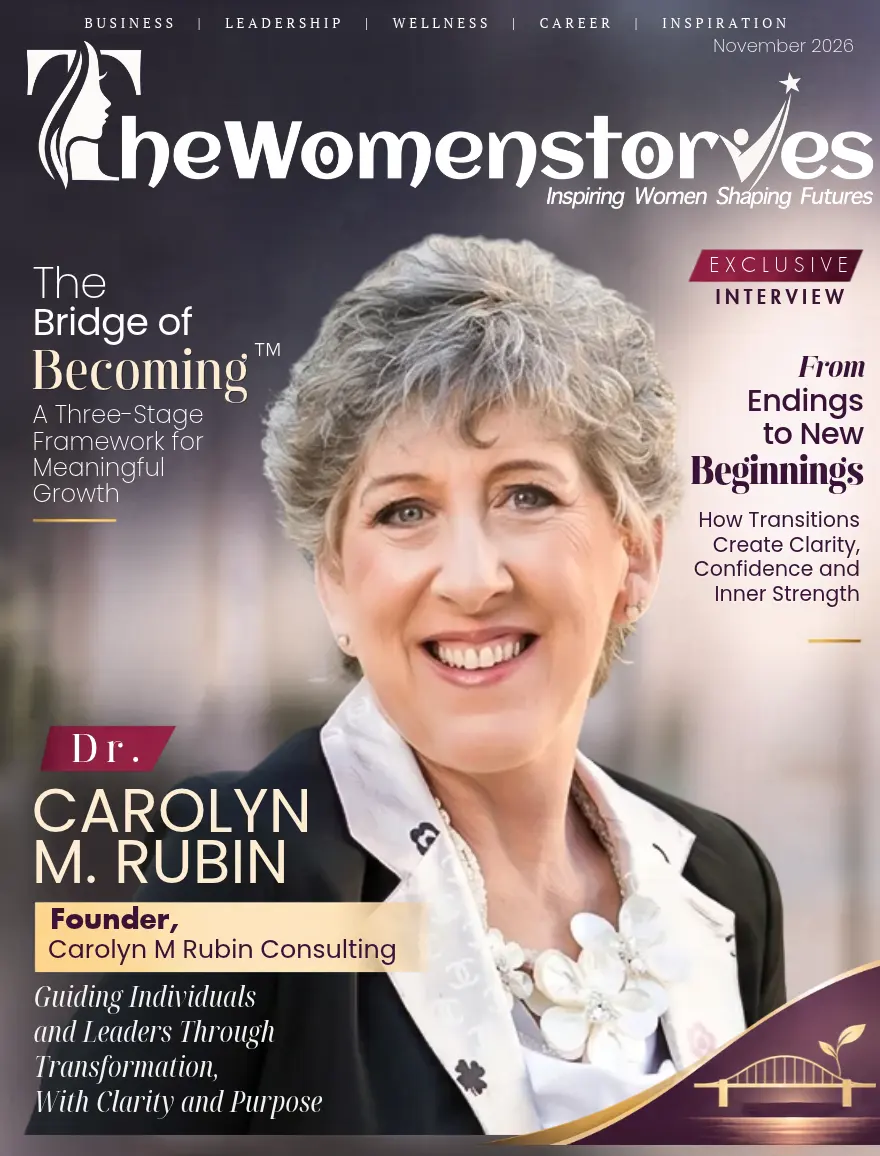
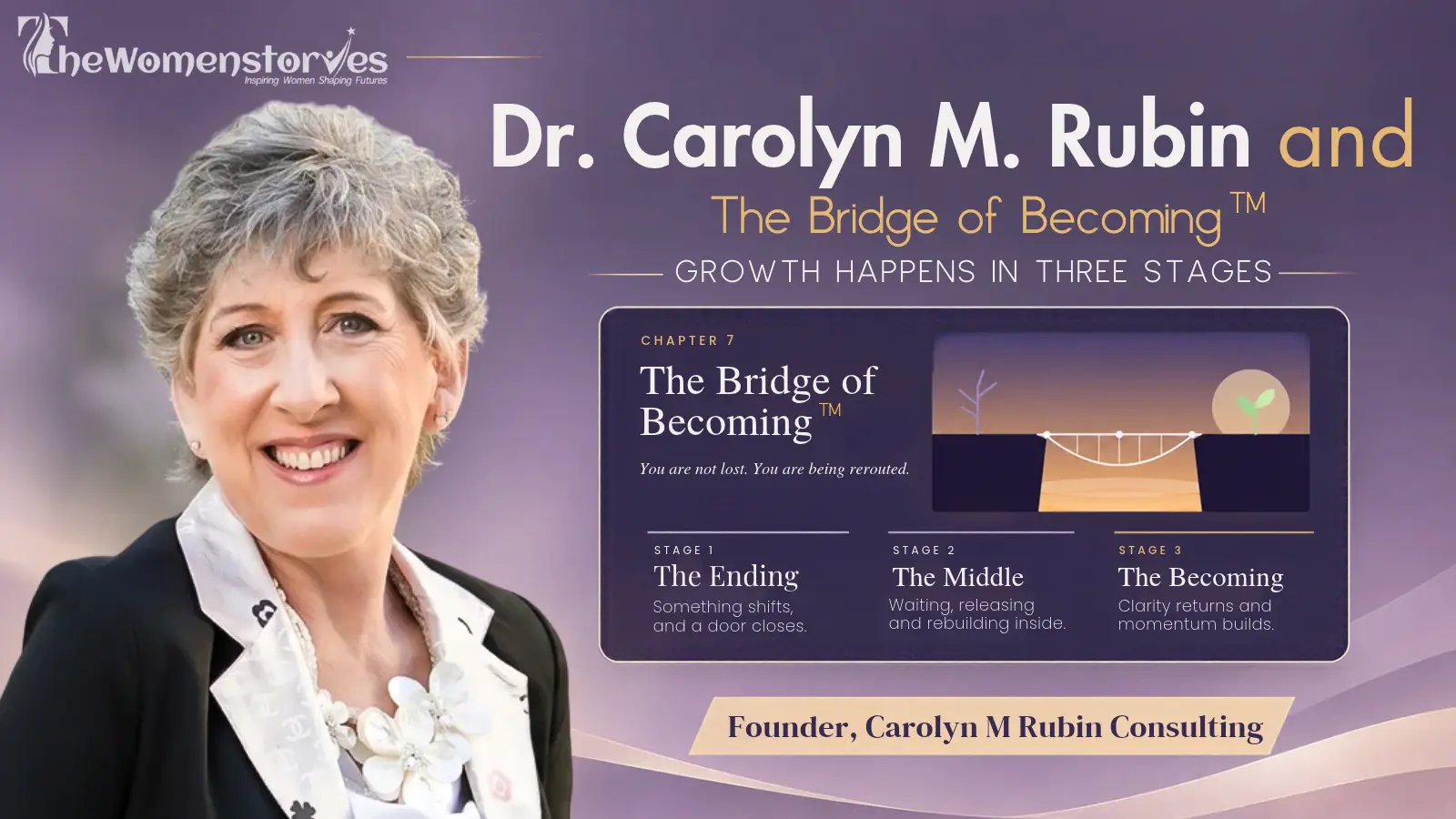
Dr. Carolyn M. Rubin, founder of Carolyn M Rubin Consulting, explores how personal transformation begins when familiar circumstances change.
To elucidate this process, she developed the Bridge of Becoming™ framework. It presents a three-stage perspective on growth: the ending, the middle, and the becoming.
Each stage represents a different part of moving through change, from accepting what has shifted to rebuilding a sense of direction.
“You are not lost. You are being rerouted,” she says.
Usually, an ending feels like failure. But a closed door doesn't always mean you made the wrong decision. Sometimes, circumstances change before their meaning becomes clear. The challenge is learning to respond to that uncertainty without allowing it to define the future.
Dr. Carolyn M. Rubin believes that transformation begins with an important shift in perspective. Rather than treating difficult transitions as problems that must be solved immediately, individuals should approach them as opportunities to reflect and realign their priorities.
Stage One: The Ending and the Importance of Letting Go
The first stage of the Bridge of Becoming™ begins when something shifts (usually a door closes). Examples include leaving a job, experiencing a personal loss, or facing an unexpected change in responsibilities.
Endings are difficult because people often associate familiarity with security. Even when a situation has become unfulfilling, leaving it can create anxiety.
However, holding on to an ending does not protect what matters. It just delays the opportunity to understand what has changed and what needs attention.
Dr. Carolyn M. Rubin offers a new perspective to adopt. It recognizes the strength and wisdom people already possess. From this perspective, an ending does not automatically indicate that something is broken.
It signals that a particular chapter has reached its natural limit.
She acknowledges that letting go will not be painless. People may experience disappointment and uncertainty and spend time reflecting, but they must not allow these experiences to permanently define who they are.
Stage Two: The Middle is Where Inner Rebuilding Happens
The middle is the most uncomfortable stage of transformation.
The previous chapter has closed, but the next one has not fully taken shape. Plans feel incomplete, motivation fluctuates, and familiar sources of confidence no longer provide the same reassurance. This is the waiting, releasing, and rebuilding stage of the Bridge of Becoming™.
Here, uncertainty does not mean a lack of progress.
Dr. Carolyn M. Rubin invites a different interpretation. Growth does not always produce immediate evidence of change. More often than not, progress begins with inner work that doesn’t necessarily make waves, so to speak. It involves examining personal values, restoring emotional balance, reconsidering priorities, and learning to trust one's judgment again.
The middle also reveals habits that were difficult to notice before a major transition. This presents an exciting opportunity: to build a more stable understanding of personal worth.
These habits make this stage easier to manage:
- Create space for reflection.
- Separate what you know from what you fear.
- Maintain small, dependable routines.
- Choose one manageable next step.
- Seek support when needed.
Stage Three: The Becoming and the Return of Clarity
The third stage begins when clarity returns and momentum builds. This doesn’t mean all questions are answered. It means that the person moving through the transition begins to make decisions with confidence. Becoming does not necessarily mean returning to life as it was before. A difficult experience can change how someone understands success, relationships, leadership, and personal responsibility. The next chapter may look different from the original plan.
Becoming can, however, turn into a source of pressure as well. People may feel compelled to emerge from a difficult period stronger, more productive, or more accomplished than before.
But growth does not equate to constant achievement.
These are some ways in which becoming can take place: setting healthy boundaries, pursuing a different career, communicating more honestly, allowing time for recovery before making a major decision, or returning to a long-delayed ambition with a clearer understanding of why it matters.
In short, becoming is where reflection turns into intentional action.
The Bridge of Becoming™ Connects Mindset, Emotion, and Purpose
Dr. Carolyn M. Rubin's Triple Quotient approach combines intellectual intelligence (IQ), emotional intelligence (EQ), and spiritual intelligence (SQ).
Applied to personal growth, these dimensions offer ways to understand a transition.
Intellectual intelligence supports clear thinking, problem-solving, and evaluating possible actions. Emotional intelligence helps people recognize their feelings and understand how those feelings affect their decisions. Spiritual intelligence encourages reflection on meaning, values, and the principles that guide a person's life.
Together, these perspectives help individuals make decisions that consider both immediate needs and longer-term fulfillment.
Dr. Carolyn M. Rubin's Vision for the Next Chapter
The Bridge of Becoming™ reminds us that uncertainty is not failure.
An ending creates space for reflection. The middle teaches patience and self-awareness. Becoming brings renewed clarity and confidence.
The process occurs when individuals are honest with themselves and focus on what they are learning, what they need to release, and which choices align with their values.
Dr. Carolyn M. Rubin supports individuals and leaders as they work through these transitions. Connect with her on LinkedIn, Instagram, Facebook to learn more about placing personal growth at the center of meaningful change.
More Features:-