
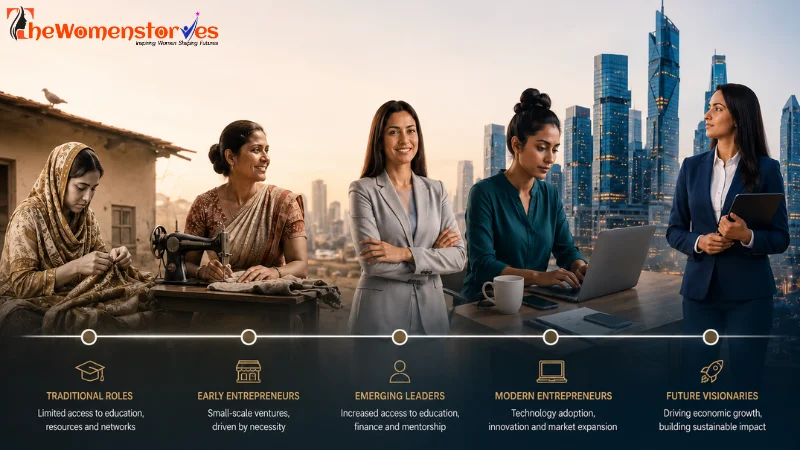
Women entrepreneurship in emerging markets has undergone a significant transformation over the past decade.
What was once limited by structural barriers, restricted access to resources, and social constraints is now gradually evolving into a dynamic and growing segment of the global business ecosystem. Across regions such as Asia, Africa, the Middle East, and Latin America, women are not only starting businesses but also building enterprises that contribute meaningfully to economic development.
This evolution is not driven by a single factor. It is the result of changing societal attitudes, improved access to education, digital connectivity, and the gradual expansion of financial and institutional support systems.
However, the journey remains complex.
While opportunities have increased, women entrepreneurs in emerging markets continue to navigate unique challenges that shape how their businesses are built, scaled, and sustained.
Early Barriers and Structural Limitations
Historically, women in many emerging markets faced significant barriers to entrepreneurship.
Limited access to education, financial resources, and professional networks restricted their ability to start and grow businesses. In many cases, entrepreneurship was not viewed as a viable path for women due to cultural expectations and institutional limitations.
These constraints resulted in:
- Lower participation in formal business sectors
- Limited access to credit and investment
- Dependence on informal or small-scale economic activities
Despite these challenges, women continued to participate in economic activities, often through small enterprises that operated within local communities.
The Shift Toward Opportunity-Driven Entrepreneurship
Over time, the nature of women entrepreneurship has shifted.
Instead of being driven solely by necessity, more women are now entering business as a result of opportunity. Increased access to education and exposure to global markets have enabled women to identify gaps and create solutions.
This shift is reflected in:
- Growth of women-led startups in urban and semi-urban areas
- Expansion into sectors such as technology, services, and digital businesses
- Increased participation in formal business ecosystems
Entrepreneurship is no longer just a means of income, it is becoming a platform for innovation and leadership.
The Role of Digital Transformation
One of the most significant drivers of change has been digital technology.
Access to the internet, mobile platforms, and digital tools has lowered entry barriers for women entrepreneurs. Businesses can now be started with relatively lower capital, and reach is no longer limited to local markets.
Digital transformation has enabled:
- Online businesses and e-commerce platforms
- Remote service-based enterprises
- Access to global customers and networks
For many women, digital platforms provide flexibility, allowing them to manage businesses alongside personal responsibilities.
Financial Access: Progress and Gaps
Access to finance remains one of the most critical factors influencing women entrepreneurship.
While there has been progress through microfinance institutions, government initiatives, and specialized funding programs, challenges still exist.
Women entrepreneurs often face:
- Limited access to formal credit systems
- Higher scrutiny in funding processes
- Smaller investment sizes compared to male counterparts
Despite these challenges, alternative funding models such as community-based financing and digital lending platforms are beginning to create new opportunities.
Key Drivers Behind the Growth of Women Entrepreneurship
Several factors have contributed to the evolution of women-led businesses in emerging markets:
- Improved access to education and skill development
Enabling women to enter diverse industries - Digital connectivity and technology adoption
Reducing barriers to entry and expansion - Government and institutional support
Through policies, grants, and training programs - Changing societal perceptions
Increasing acceptance of women in business roles - Global exposure and networking opportunities
Allowing entrepreneurs to learn and collaborate beyond local markets
These drivers collectively support the growth of a more inclusive entrepreneurial ecosystem.
Challenges That Continue to Shape Growth
Despite progress, women entrepreneurs in emerging markets still face structural and operational challenges.
Some of the most significant include:
- Balancing business with personal and family responsibilities
- Limited access to mentorship and professional networks
- Scaling businesses beyond local markets
- Navigating regulatory and administrative complexities
- Overcoming cultural and societal expectations
These challenges influence not only how businesses are built but also how quickly they can grow.
A Different Approach to Business Growth
Women entrepreneurs in emerging markets often adopt a different approach to building businesses.
Instead of focusing solely on rapid expansion, many prioritize:
- Sustainability over aggressive scaling
- Community impact alongside profitability
- Gradual and stable growth
This approach is shaped by both necessity and strategic thinking. It allows businesses to remain resilient in environments where external support may be limited.
The Broader Economic Impact
The growth of women entrepreneurship has significant implications for emerging economies.
Women-led businesses contribute to:
- Job creation and local economic development
- Increased household income and financial independence
- Greater diversity in business perspectives
As participation increases, the overall economic ecosystem becomes more inclusive and balanced.
The Road Ahead
The future of women entrepreneurship in emerging markets will depend on continued progress in key areas.
These include:
- Expanding access to finance and investment
- Strengthening support networks and mentorship programs
- Improving infrastructure and digital access
- Encouraging policy frameworks that support inclusion
Sustained growth will require collaboration between governments, institutions, and the private sector.
Conclusion
The evolution of women entrepreneurship in emerging markets reflects both progress and ongoing challenges.
Women are moving from the margins of economic activity to becoming central contributors to business and innovation. While structural barriers still exist, the combination of digital transformation, education, and changing societal attitudes is creating new opportunities.
The journey is not uniform across regions, but the direction is clear.
Women entrepreneurs are not only building businesses, they are reshaping how businesses are built, sustained, and integrated into society.
Related Articles:-