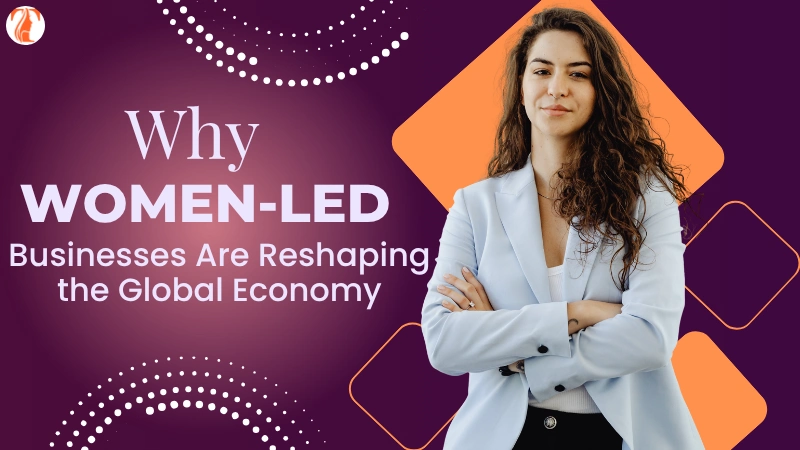
In today’s rapidly evolving marketplace, women-led businesses are no longer on the sidelines, they are right at the center of global transformation. Across continents, women entrepreneurs and executives are redefining what it means to lead, manage, and grow a company. They are not only breaking barriers but also building enterprises that are sustainable, inclusive, and innovative. From small local startups to multinational corporations, women leaders are proving that their way of doing business does more than generate profit, it creates impact, uplifts communities, and reshapes the very fabric of the global economy.
This shift is not just inspirational, it is measurable. Studies consistently show that companies with more women in leadership positions outperform their peers in profitability, innovation, and employee engagement. As the global economy faces challenges of inequality, digital disruption, and sustainability, women-led businesses are stepping forward with fresh solutions and new ways of thinking.
The Changing Landscape of Global Business
Traditionally, business leadership has been dominated by men. For decades, women had to fight stereotypes, limited access to capital, and cultural barriers just to make their voices heard in the boardroom. Today, that reality is shifting. According to data from the World Economic Forum, women now own around one-third of businesses worldwide, and the number is steadily increasing.
This change is not accidental. Education, globalization, and technology have empowered women to start and scale businesses faster than ever before. Online platforms, digital marketing, and remote work have leveled the playing field, allowing women to build companies without the traditional barriers of large capital investments or geographical limitations. As a result, the presence of women-led enterprises has become a defining feature of the modern global economy.
Why Women-Led Businesses Are Different
What sets women-led businesses apart is not just who leads them, but how they are led. Research has found that women leaders often bring unique perspectives and values that change the DNA of an organization.
-
A People-First Approach
Women-led companies often prioritize inclusivity, collaboration, and employee well-being. This people-first philosophy leads to higher employee retention, improved morale, and stronger workplace cultures. -
Focus on Long-Term Growth
Instead of chasing short-term profits, many women leaders emphasize sustainable growth. They tend to reinvest in their communities, support employee development, and create companies that can withstand market volatility. -
Innovative and Adaptive Thinking
Women who break into business leadership often do so by challenging existing systems. This resilience fosters creativity and adaptability, enabling women-led businesses to innovate quickly in competitive markets. -
Social and Environmental Responsibility
Studies show women leaders are more likely to champion corporate social responsibility (CSR) initiatives. From eco-friendly supply chains to diversity programs, women-led companies often align profit with purpose.
The Economic Impact of Women-Led Businesses
The influence of women entrepreneurs extends far beyond boardrooms and balance sheets. Their presence is directly tied to the broader development of economies around the world.
-
Boosting GDP: According to McKinsey, advancing women’s equality in business could add $12 trillion to global GDP by 2025. This staggering figure highlights the transformative economic potential of women-led enterprises.
-
Job Creation: Women-led businesses are engines of employment. Many small and medium-sized enterprises (SMEs) run by women employ local workers, create opportunities in underserved regions, and strengthen local economies.
-
Global Competitiveness: By contributing new perspectives and business models, women entrepreneurs make industries more competitive, innovative, and diverse.
-
Bridging Inequality: When women lead businesses, they often support other women, through mentorship, hiring practices, and inclusive workplace policies. This ripple effect helps reduce gender inequality at multiple levels.

Challenges Women Leaders Still Face
While progress is undeniable, the path for women in business is still paved with obstacles.
-
Access to Capital: Women entrepreneurs receive a disproportionately small share of global venture capital funding, less than 3% in some markets.
-
Cultural Barriers: In many regions, gender stereotypes continue to limit women’s opportunities to scale their businesses.
-
Balancing Roles: Societal expectations around family and caregiving often place additional pressure on women business leaders.
-
Representation at the Top: Despite growth, women still hold fewer than 10% of CEO positions in Fortune 500 companies.
These challenges remind us that while women-led businesses are reshaping the global economy, true equality in the business world is still a work in progress.
Success Stories That Inspire Change
Examples of women-led businesses making a mark on the world are plentiful:
-
Whitney Wolfe Herd, founder of Bumble, redefined online dating by creating a platform where women make the first move, turning it into a billion-dollar brand.
-
Sara Blakely, founder of Spanx, revolutionized fashion with an idea born at home, later becoming one of the youngest self-made female billionaires.
-
Kiran Mazumdar-Shaw, founder of Biocon in India, transformed biotech in Asia while championing affordable healthcare.
-
Jessica O. Matthews, founder of Uncharted Power, merged innovation with sustainability by creating energy solutions in underserved communities.
These stories showcase not just financial success, but the broader vision women bring to the business world, innovation, inclusivity, and purpose.
The Future of the Global Economy Is Female
Looking ahead, the role of women in shaping the global economy is set to expand further. Trends such as digital entrepreneurship, impact investing, and the demand for sustainable business practices align perfectly with the strengths of women-led enterprises.
Governments, investors, and institutions are also recognizing this. Increasingly, programs and funding opportunities are being tailored to support women entrepreneurs. Large corporations are embracing diversity initiatives that place women in leadership pipelines. And most importantly, women themselves are building networks and ecosystems that sustain each other’s growth.
Conclusion
The rise of women-led businesses is more than a success story, it is a turning point in the history of the global economy. Women entrepreneurs and executives are not just participating in business; they are reshaping its purpose, values, and outcomes. By fostering innovation, prioritizing sustainability, and uplifting communities, women-led enterprises are proving that business can be both profitable and purposeful.
As the world navigates economic uncertainty, climate change, and rapid digital transformation, the need for inclusive, forward-thinking leadership has never been greater. Women leaders are answering that call, not just for themselves, but for societies and economies across the globe.
Why are women-led businesses reshaping the global economy?
Because they represent the future, a future where business is not only about growth, but also about equity, responsibility, and lasting impact.