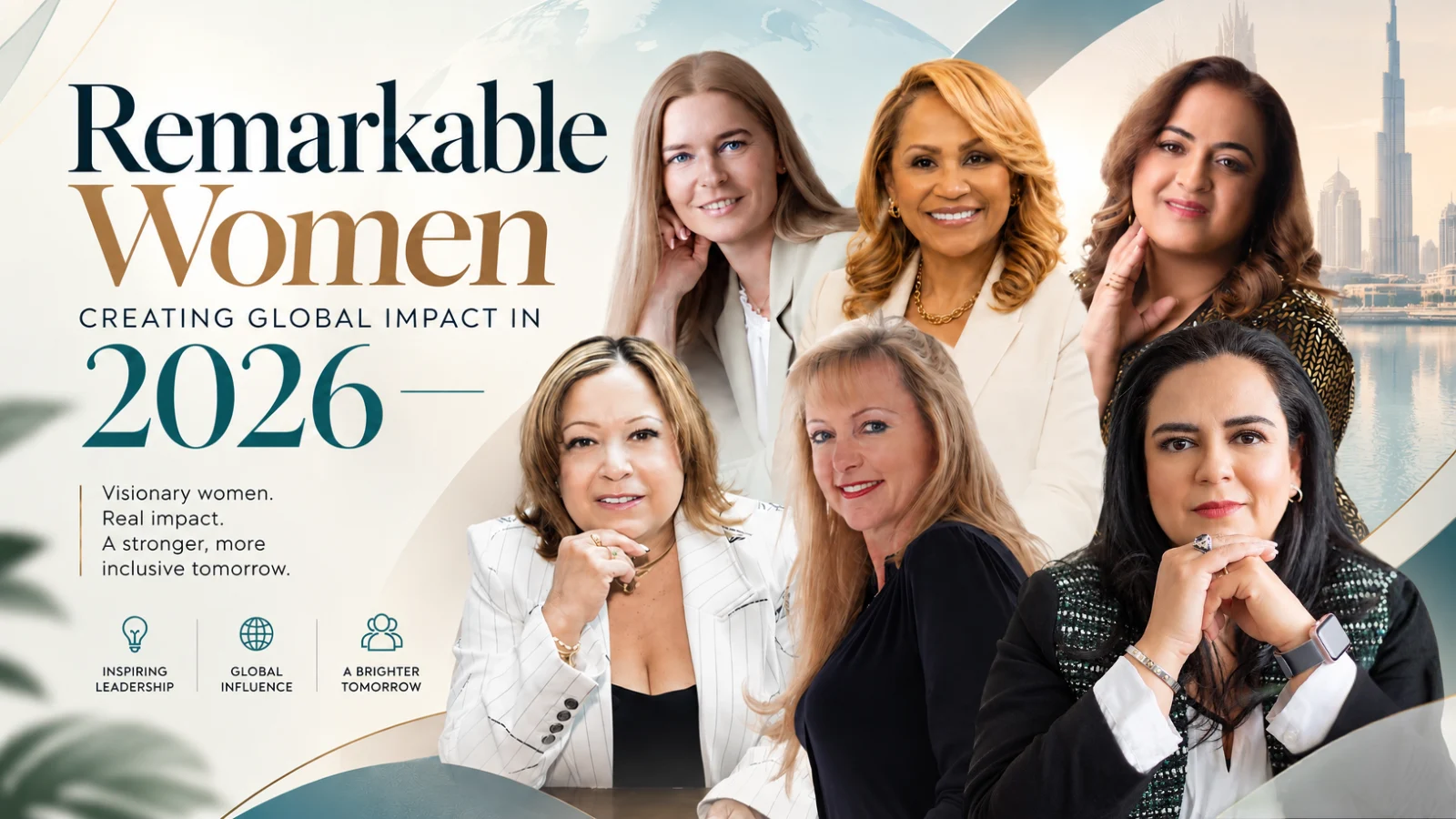
Impact does not follow a single path. Sometimes it begins by creating a space where people can restore their well-being; sometimes by helping businesses turn decades of experience into sustainable growth. It can emerge through the courage to redefine success, the determination to keep humanity at the center of technological transformation, the ability to strengthen decision-making in boardrooms, or the commitment to design safer communities. What connects these different forms of influence is not a particular industry or title, but a willingness to recognize what can be improved and take meaningful action.
The women featured in “Remarkable Women Creating Global Impact in 2026” reflect that diversity of purpose. Urška Kovič is reimagining wellness around privacy, regeneration, and genuine human care, while Margaret Phinizy is translating nearly three decades of corporate leadership into practical transformation and opportunity for small and mid-sized businesses. Ayeesha Kanji represents a more personal dimension of impact, demonstrating how self-awareness, well-being, and intentional choices can redefine the meaning of professional success. Dr. Rosa M. Colón-Kolacko is bringing the human dimension into organizational transformation and the evolving world of artificial intelligence, advocating for innovation that enhances rather than overlooks human potential. Sharon Constançon combines decades of expertise in governance and foreign exchange to help boards and businesses identify risks that are often hidden beneath the surface, while Mercedes Escudero Carmona is advancing a preventive, participatory, and human-centered approach to security and the creation of safer communities.
Across wellness, entrepreneurship, business transformation, artificial intelligence, governance, financial risk, and public security, their journeys demonstrate that meaningful global influence can begin wherever expertise meets purpose. Together, their stories offer six distinct perspectives on leadership in 2026, showing how experience can be transformed into service, challenges into new directions, and ideas into practical contributions that extend beyond the individual. TheWomenStories invites readers to discover the journeys, perspectives, and work of these remarkable women and the different ways they are creating impact in the world around them.
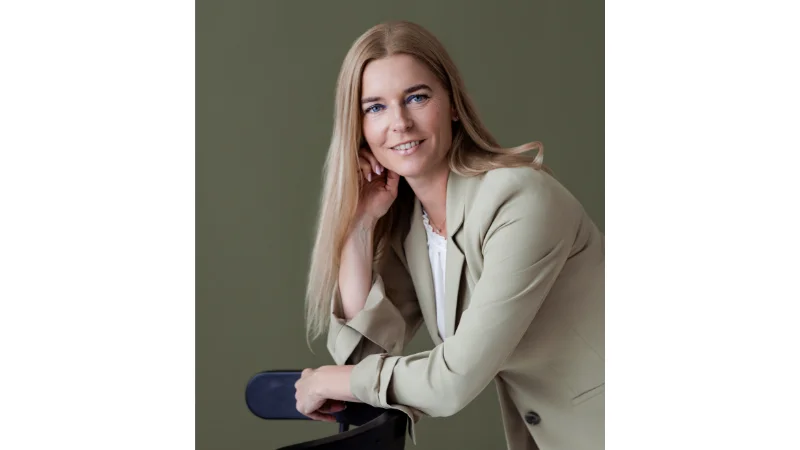
Urška Kovič
Some businesses begin with a market opportunity. Others begin with a personal realization. For Urška Kovič, the idea behind Fortisspa emerged during a particularly demanding period in her life, when she found herself searching for something seemingly simple: a private place where she could leave her worries behind, restore her energy, and simply breathe.
What she discovered was a gap. Spaces offering genuine privacy, without crowds, noise, or distractions, were surprisingly difficult to find. That experience eventually became the inspiration for Fortisspa, the boutique wellness center she founded and now leads as CEO in Domžale, Slovenia.
For Urška, entrepreneurship has never been solely about building a business. It is about creating value by addressing real human needs and developing something that reflects a story the entrepreneur genuinely believes in. At Fortisspa, that philosophy has translated into an experience centered on privacy, peace, personalized attention, and high-quality regeneration.
From the beginning, Urška wanted to challenge the idea that wellness should be an occasional luxury reserved for holidays or special occasions. She envisioned it as an essential part of a healthy lifestyle, a way for people to slow down, reconnect with themselves, and intentionally create time for their well-being.
That thinking influences the entire Fortisspa experience. Rather than focusing on volume, the center takes a highly personalized approach. Instead of rushing, it gives guests time; instead of noise, it prioritizes peace.
Fortisspa offers private sauna experiences, facial treatments, massages, a salt room, and individually tailored wellness programs. Guests can create their own combination of services depending on their personal needs. Some seek deep relaxation after demanding periods at work, while others focus on recovery, skin care, or strengthening their overall well-being and immune system. For Urška, every guest arrives with a different story, and the experience should be equally individual.
Over the years, she has witnessed an important shift in how people perceive wellness. Recovery and regeneration are increasingly understood not as indulgences, but as contributors to a sustainable and successful life. Reducing stress, improving sleep, supporting the immune system, and deliberately making time to recharge can influence how people show up as partners, parents, colleagues, and business leaders.
This philosophy also takes Urška beyond Fortisspa. She collaborates with companies and organizations, delivering lectures on health, stress reduction, employee well-being, and regeneration as a foundation for long-term success. She believes people are an organization's greatest asset and that investing in their well-being is not simply an expense, but one of the smartest long-term investments a company can make.
Her entrepreneurial journey has taught her patience and resilience, but perhaps most importantly, the value of listening. Many of Fortisspa's best ideas have emerged not in an office, but through conversations with guests. By understanding their challenges, expectations, and changing lifestyles, Urška and her team continue to adapt and improve the experience they provide.
The people behind that experience are equally important. Premium treatments and quality products matter, but Urška believes genuine care ultimately creates the strongest connection. Professional expertise, a sincere smile, thoughtful attention, and making every guest feel welcome are among the reasons clients continue to return.
Continuous learning remains another important part of her leadership. Urška regularly attends professional education programs and industry events in Slovenia and abroad, seeking knowledge and innovations that can further enhance Fortisspa. She also participates in business organizations that encourage collaboration, knowledge sharing, and mutual support among entrepreneurs.
Yet her definition of success remains deeply human. Beyond financial results, her greatest reward is hearing guests say they feel calmer, more energized, or have finally allowed themselves to make time for their own well-being. Those moments reinforce her belief that even small acts of self-care can meaningfully improve someone's quality of life.
Looking ahead, Urška wants Fortisspa to remain a boutique wellness destination where quality, privacy, and personalized care always come first. She also hopes to continue raising awareness that caring for oneself is not selfish, it is a responsibility. When people protect their own well-being, they are better equipped to care for others and navigate the demands of everyday life.
For Urška, the future of wellness is not necessarily about increasingly larger complexes. It lies in authentic experiences, meaningful human connections, and spaces where people feel safe, respected, and genuinely welcome.
Today, she is building more than a wellness business. Through Fortisspa, Urška is creating a place where people can temporarily put down the weight of everyday life, take a deep breath, restore their energy, and return feeling calmer, healthier, and more connected to themselves.
-
Website: Fortisspa
-
LinkedIn: Urška Kovič
-
Facebook: Fortisspa
-
Instagram: fortisspa_domzale
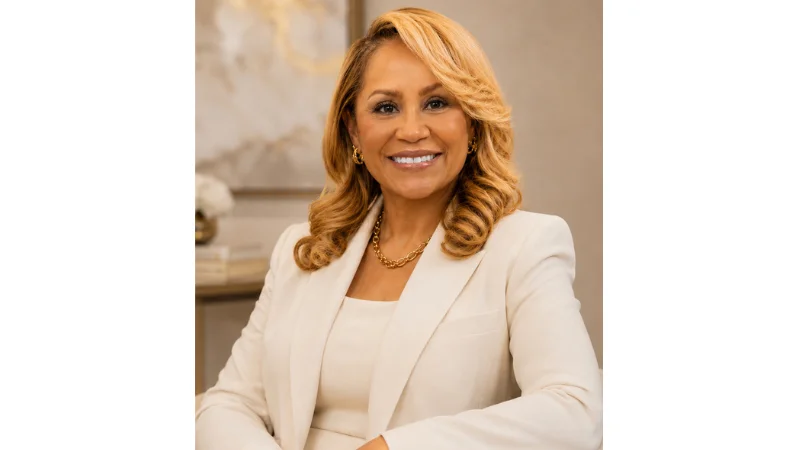
Margaret Phinizy
Some of the most meaningful chapters in a career begin not with a carefully planned next step, but with a question that changes how success itself is understood. For Margaret Stephenson Phinizy, that question was simple yet profound: “What do I want everything I’ve learned to be used for?”
Today, Margaret is the Founder and CEO of EMRG Consulting Group, a business transformation advisory firm helping small and mid-sized businesses strengthen operations, improve customer experiences, and use practical artificial intelligence to build stronger foundations for sustainable growth. Behind this mission are nearly three decades of corporate leadership, primarily in financial services, and a personal transition that reshaped how she views ambition, resilience, wellness, service, and legacy.
Throughout her corporate career, Margaret led work across customer experience, business strategy, marketing, operational improvement, and transformation. Her experience gave her firsthand insight into how large organizations use disciplined processes, technology, data, customer understanding, and strategy to manage complexity and drive growth.
Her next professional chapter, however, unfolded differently than expected. Margaret had already been considering early retirement and eventually pursuing an encore career. Changes in her health, together with an unexpected professional transition, accelerated that timeline and encouraged her to reconsider not only what she wanted to do next, but how she wanted to live and lead.
After years in demanding senior leadership environments, she recognized that extraordinarily long working days were not sustainable and should not define her future. The experience also changed her understanding of resilience. Rather than viewing resilience simply as the ability to keep pushing through difficult circumstances, Margaret came to see that it can also mean recognizing when change is necessary, protecting what matters, adapting to a new reality, and continuing to believe that meaningful impact remains possible.
She describes this evolution as moving “from corporate success to purposeful legacy.”
Entrepreneurship introduced another kind of transformation. After decades of leading within established organizations, Margaret became a builder, and, in many respects, a beginner again. Yet the leadership principles developed throughout her corporate career remained highly relevant. One now sits at the heart of her approach: sustainable transformation begins with clarity, not technology.
Margaret believes businesses must first understand the problem they are solving, the people they serve, the processes supporting their work, and the outcomes that matter. The same philosophy guides her approach to AI. While she recognizes its tremendous potential for small businesses, she believes technology should serve the business rather than become the strategy itself. Instead of beginning with “Where can we use AI?”, she starts by asking what business problem needs to be solved and whether AI is the right tool to help solve it.
This practical perspective also shaped EMRG. Large organizations can support dedicated teams across strategy, operations, technology, analytics, customer experience, and transformation. Small business owners often carry many of those responsibilities themselves. As their companies grow, informal processes can create bottlenecks, technologies can become disconnected, customer experiences can become inconsistent, and critical decisions can remain concentrated with the owner.
Through EMRG, Margaret is bringing lessons from enterprise leadership “from Wall Street to Main Street.” Her aim is not to make smaller businesses operate like large corporations, but to translate proven strategic discipline, structure, and emerging technology for the realities of owner-led businesses.
EMRG is building an ecosystem of advisory services, proprietary frameworks, diagnostics, and AI-enabled tools centered on operational clarity, customer experience, practical AI enablement, leadership, and sustainable growth. Yet Margaret’s vision extends beyond improving individual companies.
She believes stronger small businesses can contribute to stronger communities. Healthy businesses create jobs, generate economic opportunity and wealth, support families, purchase from other businesses, and give successful owners greater capacity to invest in others. Her long-term aspiration is for EMRG’s work to reach and equip one million business owners. More than a measure of scale, the goal represents multiplication, helping stronger businesses create stronger communities and enabling entrepreneurs to extend opportunity beyond themselves.
Margaret’s approach to leadership has also been shaped by faith, service, and servant leadership. She views leadership not simply as achievement, but as stewardship, the responsibility to use one’s abilities, experiences, resources, and opportunities in service to others. One principle captures this perspective particularly well: “Purpose does not always need a spotlight.”
For Margaret, entrepreneurship is therefore not a rejection of her corporate career. It is an opportunity to put everything that career taught her to work differently. Her first professional chapter demonstrated what she could accomplish; this chapter is increasingly about what those experiences can enable for others.
Her journey reflects a meaningful form of impact, one rooted in reinvention, clarity, service, and the belief that accumulated experience becomes even more valuable when it creates opportunity beyond oneself. As Margaret expresses the purpose behind this new chapter: “What’s in me isn’t just for me. I’m built to unlock others.”
-
LinkedIn: Margaret Phinizy
-
Instagram: mphinizy
-
Facebook: Margaret Phinizy
-
Website: EMRG Consulting Group
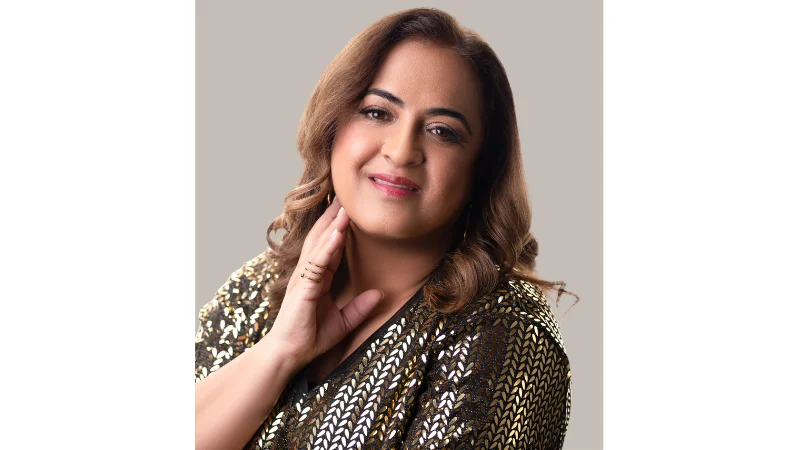
Ayeesha Kanji
Some of the most meaningful professional journeys begin when a person becomes willing to question the path they once believed they were supposed to follow. For Ayeesha Kanji, that realization did not arrive through one defining moment. It developed gradually through education, professional experience, observation, entrepreneurship, and a growing understanding of the kind of life and impact she wanted to create.
Raised in a family where entrepreneurship, full-time careers, education, international travel, and humility were all part of everyday life, Ayeesha was exposed early to different ways of approaching work and responsibility. She watched her mother manage the demands of weekly commuting while her father experienced the flexibility that came with entrepreneurship. These contrasting experiences quietly shaped her understanding of work, independence, and the choices available beyond a conventional career.
As a teenager, Ayeesha was presented with the opportunity to move to Toronto, Canada, but chose not to disrupt her environment during an important stage of her life. After completing high school, however, she was ready for that change. She moved to Toronto and later graduated from Toronto Metropolitan University, formerly Ryerson University, beginning a professional chapter that would teach her as much about persistence and self-belief as it did about business.
Her early job search reflected the discipline that would later become central to her entrepreneurial mindset. Ayeesha created spreadsheets to track applications, follow-ups, emails, calls, interviews, and potential opportunities. She experienced the uncertainty familiar to many professionals, applications that received no response, temporary and contract positions, interviews that progressed and others that did not. Yet she continued showing up.
That experience left her with an enduring belief: progress depends greatly on the actions people are willing to take for themselves. Opportunities matter, but so do consistency, accountability, and the willingness to keep moving when results are uncertain.
Throughout her professional years, Ayeesha explored different working environments and observed various business cultures, leadership approaches, and entrepreneurs within her network. Her mother once suggested that human resources might suit her, while her father believed her focus could take her in many directions. Ayeesha herself remained curious, absorbing lessons from her environment while gradually recognizing that climbing the traditional corporate ladder was not the future she wanted.
Entrepreneurship had already entered her journey between 2011 and 2013, when she experimented with working independently through ASK.Solutions. Although she later returned to other professional environments, the experience remained significant. Over time, she became increasingly drawn not simply to the flexibility associated with entrepreneurship, but to the opportunity to work with greater passion, intention, and awareness of the contribution she wanted to make.
In 2022, Ayeesha resigned from her final full-time position and committed herself to entrepreneurship. It was a decision rooted less in rejecting conventional employment than in understanding herself more clearly. She recognizes that neither corporate life nor entrepreneurship is universally right for everyone. What matters, in her view, is having enough self-awareness to understand where an individual can contribute most meaningfully.
For Ayeesha, that has meant creating a professional life with room for adaptability, intentional routines, evolving client needs, and different seasons of work. It has also meant moving away from environments where rigid routines and micromanagement left little space for the person she was becoming. Entrepreneurship instead offered an unfamiliar kind of comfort: the freedom to navigate uncertainty while remaining responsible for her own direction.
Her perspective also challenges conventional definitions of achievement. In a culture where professional worth can easily become attached to titles, salaries, promotions, possessions, or constant productivity, Ayeesha places personal well-being at the centre of sustainable success. Her philosophy is simple but increasingly relevant: health is wealth. Physical well-being and mental strength, she believes, are fundamental to the ability to fulfil responsibilities, pursue ambitions, and contribute meaningfully to the lives of others.
That understanding has influenced how she approaches entrepreneurship today. Rather than viewing success solely through financial outcomes, she measures progress through the ability to show up better than the day before, make conscious choices, and build a life that reflects who she is rather than who she is expected to become.
As conversations around careers continue to change amid evolving workplaces, shifting expectations, new generations, and technologies such as artificial intelligence, Ayeesha’s journey offers a timely perspective. Careers do not always need to follow a straight line, and changing direction does not necessarily mean starting over. Sometimes, it means carrying every previous lesson into a path that fits more authentically.
For Ayeesha Kanji, creating impact begins with that alignment. Her journey is ultimately not only about choosing entrepreneurship over conventional employment; it is about choosing awareness over autopilot, intention over expectation, and the courage to create a professional life in which being human matters just as much as what one accomplishes.
-
LinkedIn: Ayeesha Kanji
-
Instagram: ayeesha_coachconsultant
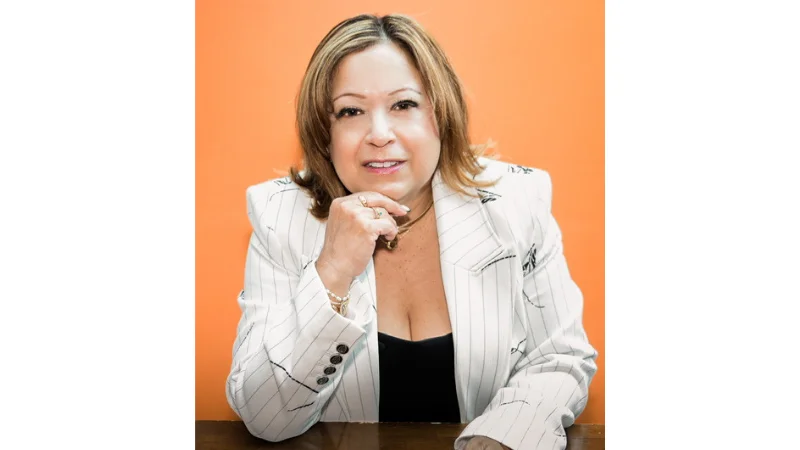
Rosa M. Colon-Kolacko
The most consequential transformations rarely begin with technology alone. They begin with an understanding of people, their experiences, aspirations, cultures, and the systems that either enable or limit their potential. This belief has shaped the career of Dr. Rosa M. Colón-Kolacko, a global executive, researcher, professor, advisor, and entrepreneur whose work consistently brings the human dimension into conversations about organizational change.
Across more than three decades, Dr. Colón-Kolacko has worked at the intersection of human experience, cultural transformation, workforce strategy, health equity, digital innovation, and leadership. Her career spans healthcare, life sciences, government, consulting, finance, and academia, with senior executive roles at Tufts Medicine, NYC Health + Hospitals, ChristianaCare, and Bristol Myers Squibb. Her experience across North America, Latin America, the UK, Europe, and Asia has shaped a leadership perspective that extends beyond any single industry or geography.
Behind that career is a deeply personal understanding of equity. Raised by her mother in Puerto Rico with limited economic resources, Dr. Colón-Kolacko learned early that opportunity is not experienced equally. Her mother had been orphaned, had not completed high school, and did not speak English. While living in different countries, Rosa often became her interpreter, giving her early insight into how language and culture can shape people's experiences with healthcare systems.
That understanding deepened when her mother suffered a devastating stroke. The experience reinforced Rosa’s belief that effective systems cannot be built around processes alone; they must recognize the cultural and human realities of those they serve. This perspective became integral to her work across cultural competence, inclusion, health equity, organizational development, and leadership.
Her corporate career gave her opportunities to translate these ideas into action. Beginning at SmithKline in Puerto Rico, she empowered employees at different levels to develop skills that strengthened engagement and quality. Following that success, she relocated to the United Kingdom for a global leadership role supporting the integration of SmithKline and Beecham. At Bristol Myers Squibb, she spent a decade leading change management, learning, people systems, and transformation initiatives across multiple regions. She later spent nearly a decade at ChristianaCare, with senior leadership responsibilities encompassing learning and development, talent management, succession planning, employee experience, and diversity and inclusion.
As Senior Vice President and Chief People Officer at NYC Health + Hospitals, her responsibilities extended across talent, organizational effectiveness, HR transformation, workforce planning, innovation, and patient experience. At Tufts Medicine, she subsequently served as Senior Vice President and Chief Diversity, Equity and Inclusion Officer, advancing workforce inclusion, community health, health equity, and organizational strategy. She also co-led the EPIC Implementation Patient Experience Committee and partnered with IT on the MyTuftsMed app, incorporating Amazon AWS and AI-supported language automation while developing dashboards, training, and rollout plans designed to improve patient care access and staff adoption.
Today, Dr. Colón-Kolacko is bringing that experience into one of leadership’s most significant frontiers: artificial intelligence. As Founder and President of NeedHumans by Global Equity Learning, she works with leaders and organizations on workforce transformation, human-centered AI design, equity, change management, and responsible technology integration. Her guiding principle is that AI should enhance human potential, helping create environments where people and technology can thrive together.
Her HUMAN-Centeric AI Design (HCAI) reflects this philosophy, focusing on humanizing design for diverse populations, reskilling people, reinventing work and careers, strengthening organizational collaboration, managing change, and connecting expertise across communities. Through NeedHumans, she is also developing an evidence-based HCAI Design Leadership Operating System, including tools such as LeadinginAI Change Readiness-CM-AIR, NH-IAIM Impact AI Measurement, and NH-AIValue Intelligence, alongside an AI leadership competency model.
Dr. Colón-Kolacko also sees women as essential architects of this technological future. She challenges the characterization of empathy, emotional intelligence, ethical reasoning, inclusion, and systems thinking as merely “soft skills.” In an AI-enabled world, she considers them strategic capabilities that can influence not only how technology performs, but whom it serves.
Her leadership philosophy follows the same human-centered approach, emphasizing humility, clarity of vision, leading with both data and heart, and recognizing and developing talent. While technology may transform organizations, she believes trust, relationships, judgment, creativity, and inclusion remain fundamental sources of human value.
Alongside her entrepreneurial work, she continues contributing through academia and research with former appointments at Bowling Green State, Georgetown and Thomas Jefferson Universities. She serves as an Adjunct Professor at Tufts University School of Medicine and Visiting Researcher at Bentley University. Her academic foundation includes a Ph.D. in Organizational Development and Change, an MBA from Henley Business School, and advanced education spanning diversity management, human resources, and AI strategy.
What distinguishes Dr. Rosa M. Colón-Kolacko is the continuity of purpose connecting each chapter of her journey. Whether transforming global organizations, advancing health equity, educating leaders, or helping businesses navigate AI, she continues to champion a future where innovation and humanity can move forward together. Through the NeedHumans Guild, vision is to convene a global community focused on sharing knowledge, accessing training, co-designing solutions, and developing people and organizations to innovate leveraging AI-enabled and fostering an equitable society.
-
LinkedIn: Rosa M. Colon-Kolacko, Global Equity Learning
-
Instagram: rosacolonkolacko
-
Website: needhumans.com | globalequitylearning.com
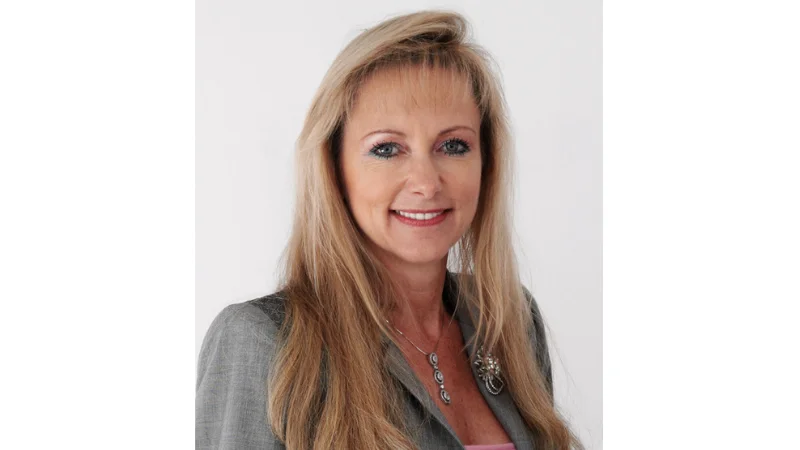
Sharon Constançon
Some of the most consequential risks in business are not the ones displayed prominently on a report. They can sit quietly in a boardroom where challenge has given way to comfortable agreement, or within a company’s currency exposure where seemingly routine decisions gradually erode profitability. Sharon Constançon, CDir MBA FCG, has spent much of her career learning to recognise precisely these kinds of risks, and helping organisations turn them into opportunities for stronger performance.
With more than four decades of experience spanning foreign exchange, governance, board effectiveness, risk management and entrepreneurship, Sharon has built a career that crosses industries as naturally as it crosses borders. Today, through Genius Boards and Valufin Limited, she operates in two highly specialised areas: helping boards become more effective and helping internationally trading businesses manage foreign exchange risk with greater discipline and strategic clarity.
Her expertise in foreign exchange stretches back to the early 1980s. At Blue Circle Limited, Sharon created a centralised foreign exchange treasury for the group before moving to Société Générale (International Bank of Johannesburg), where she established its interbank and corporate forex dealing desks and became the first female foreign exchange Chief Dealer in South Africa. Entrepreneurship followed in her twenties, laying the foundation for a career that would ultimately encompass business ownership, board appointments, governance and international leadership.
That experience now underpins Valufin, where Sharon serves as CEO. Rather than treating foreign exchange simply as a transaction to be executed through a bank or broker, her philosophy is that currency risk begins within the business itself. Valufin operates as a fractional forex manager, working from inside the organisation’s commercial reality to address areas including accounting, reporting, costing, hedging and currency-risk strategy.
Having managed foreign exchange for more than 250 companies across approximately 30 currencies, Sharon has seen how inefficient currency management can quietly diminish profitability. Her approach therefore extends beyond chasing an attractive exchange rate. It focuses on understanding why a transaction exists, when action should be taken, which strategy is appropriate and how each decision affects the wider business.
Yet numbers tell only one side of Sharon’s professional story. The other unfolds around the boardroom table.
Since 2009, her work through Genius Boards has involved board evaluations across listed companies, financial services and regulated institutions, family businesses, global organisations, public-sector entities and not-for-profit bodies. Her approach looks beyond whether governance structures technically exist to examine whether boards are actually functioning at their best.
For Sharon, an effective board requires more than compliance. Relationships, communication, challenge, debate, decision-making, transparency, risk assessment and succession planning all influence its ability to lead. Sometimes the greatest obstacle is not visible in governance documentation at all. It may be a dominant voice suppressing discussion, an important subject that never reaches the agenda, or groupthink that appears to be harmony until difficult decisions expose its consequences.
Her philosophy is captured in a simple belief: “Truthful feedback creates the space for growth.”
Through interviews, observation and behavioural insight, Sharon works to uncover what a board may struggle to recognise from within. Combining analytical rigour with empathy and emotional intelligence allows her to address sensitive issues constructively while helping Chairs and Directors strengthen leadership, communication and decision-making.
Her influence has also extended far beyond her own companies. Sharon spent almost a decade with the South African Chamber of Commerce UK, progressing from Non-Executive Director to Chairman and helping strengthen connections among South African businesses internationally. During her leadership, the Chamber expanded its reach and contributed to the establishment of the International Association of South African Chambers, creating further opportunities for collaboration across markets.
Her governance journey continues in the City of London. A Chartered Director and Chartered Governance Professional, Sharon has been a Liveryman and Court Member of the Worshipful Company of Chartered Secretaries and Administrators and became its Junior Warden in October 2025, beginning the progression toward potentially serving as Master, subject to future elections. Her broader professional contributions include being on the faculty for the AI Diploma for The Corporate Governance Institute, accredited evaluator and trainer for the Chartered Governance Institute for UK & Ireland and has also included work with the Chartered Institute for Securities & Investment and previous roles with the Institute of Directors.
What connects these seemingly different chapters is Sharon’s ability to combine IQ with EQ, technical knowledge with human understanding, and independent challenge with practical action. Whether examining the dynamics between Directors or the financial consequences of currency exposure, she approaches leadership through the same lens: look beneath what appears to be working, identify what could work better, and create a realistic path toward improvement.
As businesses navigate increasingly complex global markets, Sharon is continuing to build the international reach of both Genius Boards and Valufin. Her journey demonstrates that global impact does not always come from pursuing one conventional path. Sometimes it comes from bringing together decades of expertise, remaining willing to challenge established thinking, and having the confidence to see what others overlook.
And perhaps that is one of Sharon Constançon’s most enduring contributions to leadership: real progress begins when organisations become willing to see themselves clearly, and courageous enough to act on what they discover.
-
LinkedIn: Sharon Constançon, CDir MBA FCG
-
Facebook: Sharon Constancon
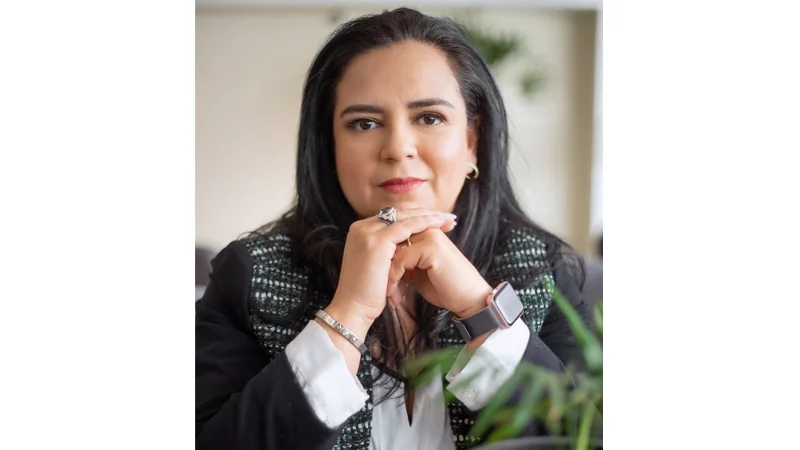
Mercedes Escudero Carmona
Creating safer communities is not simply about responding to crime; it is about understanding the environments, relationships, institutions, and social conditions that influence how people experience security in their everyday lives. For Mercedes Escudero Carmona, this broader perspective has shaped more than three decades of work across public, citizen, human, national, patrimonial, and residential security. Her career reflects an enduring commitment to prevention, social participation, and the creation of spaces where security and quality of life can advance together.
An international consultant and specialist in Crime Prevention Through Environmental Design (CPTED), Mercedes has built her professional journey at the intersection of security, environmental design, public policy, research, strategic communication, and community engagement. Rather than approaching security solely through conventional enforcement measures, her work emphasizes proactive prevention and the importance of designing environments that can reduce opportunities for crime while addressing perceptions of insecurity.
That philosophy has translated into significant work on the ground. Mercedes has advised federal, state, and municipal governments and conducted more than 150 socio-urban interventions focused on strengthening peace and security. These initiatives have contributed to the development of what she describes as “Territories of Peace” and “Safe Cities,” bringing together technical security strategies with the realities and needs of communities.
Central to her contribution is the creation of the CPTED® Socio-Urban Risk Management System, a proactive prevention methodology that integrates environmental design into risk management. Its technical structure aligns with international risk-management standards within the ISO ecosystem, including ISO 22341 and ISO 31050. Through this approach, Mercedes has helped advance a vision of security in which the physical environment, community participation, institutional strategy, and prevention work together rather than functioning in isolation.
Her understanding of security has also been shaped by extensive public-sector experience. Earlier in her career, Mercedes worked at Mexico’s Center for Research and National Security (CISEN), where her responsibilities included analysis of priority intelligence objectives. She subsequently worked with the National Human Rights Commission (CNDH) and later held responsibilities within the Executive Secretariat of the National Public Safety System, including work connected with municipal public-security development.
Her experience extended into the legislative sphere as well, where she worked on matters involving communication and later transparency and accountability. From 2018 to 2022, she served as a council member of the Citizens’ Council for Security and Justice of Mexico City. Together, these roles gave her exposure to security from multiple perspectives, from intelligence and human rights to public policy, government accountability, crime prevention, and citizen participation.
Today, Mercedes is extending that experience onto the international stage. She serves as an Elected Director on the Global Executive Board of the International Crime Prevention Through Environmental Design Association (ICA) for the 2025–2028 term and presides over its Mexico Chapter. She also serves as President of ASIS International Chapter 311 Yucatán Peninsula for 2025 and 2026. These positions reflect not only professional recognition but also her continued role in advancing dialogue and practical strategies around safer, more inclusive environments.
Education and knowledge-sharing have remained another important dimension of her journey. Mercedes has been associated with Universidad Iberoamericana as a professor since 2001 and holds a master’s degree in Communication, with a focus on Political and Institutional Communication, from the same university. She has also shared her expertise through international conferences and professional forums in countries including Sweden, Brazil, Colombia, Peru, and the United States.
Her contributions have earned recognition across the security sector. In March 2026, the Security Industry Association Women’s Forum community recognized Mercedes among 100 women in the security industry whose achievements are breaking barriers and demonstrating women’s innovative contributions to the field. In 2024, she received the WIS Amerit Award as “Outstanding Woman in Security in Latin America,” following the 2023 WIS Corporate Project Award for her Women’s City CPTED project. She was recognized as a “Peace Builder” in 2022, while earlier distinctions include being named among Mexico’s 300 Most Influential Leaders from 2017 to 2019 and receiving an Honorary Doctorate in 2020 for her academic and business trajectory with social impact.
What makes Mercedes’ journey particularly relevant to global impact is the philosophy behind the achievements. Her work demonstrates that security can be approached not only as protection, but as a collaborative process involving people, institutions, physical spaces, and social responsibility. By connecting decades of experience with methodological innovation, education, public service, and international leadership, Mercedes Escudero Carmona continues to help shape a more preventive, inclusive, and human-centered understanding of what it means to build safer communities.
-
LinkedIn: Mercedes Escudero Carmona
-
Instagram: mercyescudero
-
Facebook: Mercedes Escudero
Conclusion
The journeys of Urška Kovič, Margaret Phinizy, Ayeesha Kanji, Dr. Rosa M. Colón-Kolacko, Sharon Constançon, and Mercedes Escudero Carmona remind us that remarkable impact is not measured by a single definition of success. It can be found in helping people protect their well-being, enabling entrepreneurs to build stronger businesses, choosing a professional path aligned with personal values, ensuring technology remains connected to human needs, strengthening the decisions made around boardroom tables, or creating environments where communities can feel safer and more secure.
What makes their stories particularly meaningful is the way experience has evolved into contribution. Each has drawn from different industries, challenges, transitions, and perspectives to identify where she can make a difference. Whether through entrepreneurship, advisory work, innovation, education, organizational transformation, governance, or public service, they demonstrate that leadership becomes most valuable when knowledge is translated into action that benefits others.
As 2026 continues to bring new technologies, changing workplaces, complex global markets, evolving social priorities, and new expectations of leadership, these six women offer perspectives grounded not only in ambition, but also in purpose, adaptability, resilience, and human understanding. Their work shows that progress does not always require following established paths; sometimes it requires questioning them, improving them, or creating entirely new ones.
Ultimately, “Remarkable Women Creating Global Impact in 2026” is a reflection of six women building influence in distinctly different ways while sharing something fundamental: the determination to make their experience matter beyond themselves. Their journeys are still unfolding, but the value they are creating today offers an important reminder that global impact often begins with a clear purpose, grows through consistent action, and becomes meaningful through the people, businesses, organizations, and communities it reaches.
More Features:-